Episode Transcript
[00:00:00] Speaker A: On February 17, 2026, bear Monsanto offered over $7 billion to settle over 65,000 glyphosate cancer lawsuits.
And without even admitting anything was wrong,
[00:00:17] Speaker B: 24 hours later, President Trump signed an executive order declaring that same chemical a national security issue.
[00:00:27] Speaker A: And then RFK Jr comes out on a podcast and says the quiet part out loud. He said, we can't ban glyphosate.
80% of farmers will go out of business. But right now, if you banned glyphosate outright, it would put out of business 80% of our farmers.
[00:00:46] Speaker B: We can't ban it.
We can't ignore it, and apparently, we can't stop using it.
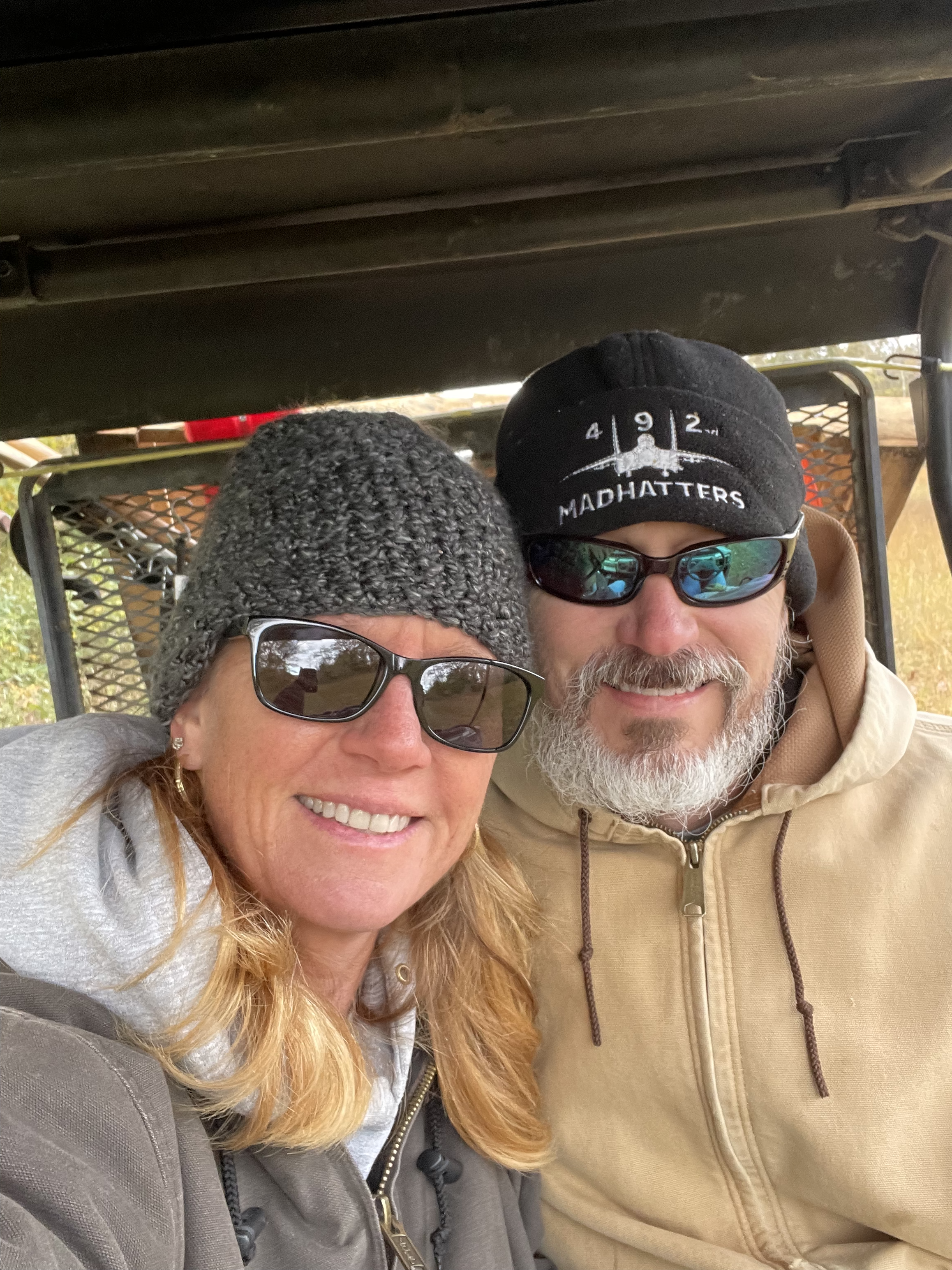
[00:00:53] Speaker A: Welcome to the Duster Mud Podcast. I'm Shelley.
[00:00:56] Speaker B: I'm Rich.
[00:00:57] Speaker A: On this podcast, we like to talk about food freedom and farming. And it feels like today it's about freedom or the lack of for the farmers in this country and the entire food system.
[00:01:11] Speaker B: I spent 25 years in the United States Air Force. The last five of that, I was in the Pentagon running some major defense programs. So this one hits for me, especially just having dealt with these big numbers and these big companies.
So I think we'll. We'll be able to provide a.
I don't know, a different perspective, maybe.
[00:01:35] Speaker A: Yeah, well, anytime you start talking about national defense, it perks our ears up.
[00:01:43] Speaker B: Yeah, for sure. Right? Yeah.
[00:01:45] Speaker A: So glyphosate is the primary chemical in Roundup, and we have been using Roundup in this country since about the 1990s, right?
[00:01:57] Speaker B: Yes.
[00:01:58] Speaker A: And that it has become ubiquitous across farming.
[00:02:03] Speaker B: Yeah. It works by blocking the protein synthesis in plants and it kills plants, except the genetically modified plants that they pick paired Roundup with in the 1990s. So you spray it on these genetically modified crops like corn, soy, cotton, and the crops don't die, but the weeds around them do.
[00:02:32] Speaker A: Well.
So from the 1990s to today, the amount that has been sprayed on our. On our properties, on our crops and in our food system has grown.
How much did you say?
[00:02:48] Speaker B: 10 times.
[00:02:49] Speaker A: 10 times. Like that's wild right now. We don't. We have a regenerative farm.
So we are farming in a way that does not use any Roundup. We don't have any glyphosate. Here we are.
We try to use everything, manure, the animals, the impact, and allow recovery times for. For the property cover crops, making sure that dirt's not exposed as much as possible.
So, that being said, you know, it's not an easy way to farm regeneratively without the.
The addition of chemicals to make the unwanted things go away. Yeah, that. It's not easy, but the chemicals.
$7 billion amongst other millions and millions of dollars that have already been paid out.
[00:03:45] Speaker B: Well, it's. They paid out over 11 billion already.
[00:03:49] Speaker A: Wow.
[00:03:49] Speaker B: So this takes it up to 18 billion. Settling lawsuits.
[00:03:54] Speaker A: And RFK Jr actually was an attorney on a big team that actually
[00:04:03] Speaker B: got
[00:04:03] Speaker A: some of that money.
[00:04:04] Speaker B: Yeah, I believe they won the court case. I don't think that one was settled. I think it was 289 million. If I remember right.
They won a court case against Bear, Monsanto. And Bayer is the only company domestic to the United States that makes glyphosate.
They're the company that mines the phosphorus, which is one of the base products for. For glyphosate. It's mined in Idaho and then it's manufactured then in Indiana and Louisiana.
And so the fact that there's one company that does this is sort of what led to the executive order saying that we have a problem, a national security problem. Because if you believe that 80% of farmers would go out of business when without this one product and this one product is made by one company, you end up with an executive order that is saying, we have to protect this.
[00:05:14] Speaker A: This is just wild for me.
[00:05:16] Speaker B: Yeah.
[00:05:17] Speaker A: Okay, so what did the, okay, $7.25 billion settlement, but they did nothing wrong the. That settlement.
How is that. How are we, how are we paying that out? What are the. What are the terms? Who's getting. Who's going to get some money? I mean, 65,000 people and probably more on some wait list somewhere.
[00:05:43] Speaker B: Well, yeah, this. There have been. What is it? A hundred and one hundred twenty five thousand.
Over 125,000 plaintiffs have made suits, have brought suit against Bayer or Monsanto before Bear bought it.
This particular settlement, the over $7 billion, it's covering 65,000 remaining lawsuits.
And it is for now and then for like 16 years in the future if you try to bring suit against them. It's all claimed in this settlement.
And from the research we've done, the settlements are anywhere per person, from like 10,000 to maybe 150,000 per person. And it's not paid out in one lump sum. It's paid out over like 20 years, basically. So if you ended up with cancer, typically a non Hodgkin's lymphoma, you'll see it written NHL in a lot of places. If you ended up with a cancer, you brought suit against them for, you know, their product causing this cancer, then you could get as little as $10,000 spread over a 20 year period.
So you would be getting $500 a year.
[00:07:14] Speaker A: Wow.
Like that's nothing, right? No, it's not nothing, but it's nothing compared to what they're doing. Like the farmers and people in the farming communities where it's heavily, heavily used, especially people and, and people making these chemicals. Those are some of the, the hardest hit when it comes to these, these cancer rates.
[00:07:37] Speaker B: Yeah.
[00:07:38] Speaker A: And you're who said. Okay, so it has been, it has been determined that it isn't safe.
[00:07:52] Speaker B: Well, ish. So the, the, our U.S. fDA has said it probably does not cause cancer.
[00:08:01] Speaker A: But the who, the World Health Organization.
[00:08:04] Speaker B: The World Health Organization says it is probably carcinogenic.
[00:08:10] Speaker A: So. So who do we believe?
[00:08:12] Speaker B: Right?
[00:08:13] Speaker A: Well actually epa.
[00:08:15] Speaker B: Sorry, it wasn't the.
[00:08:16] Speaker A: Yeah, it was. The EPA said
[00:08:21] Speaker B: maybe not probably doesn't
[00:08:24] Speaker A: and the World Health Organization says probably does.
So that whole like the science is settled thing, right?
[00:08:33] Speaker B: It is certainly not settled.
[00:08:34] Speaker A: No.
[00:08:35] Speaker B: And you know, having worked with these companies with these huge contracts, you know, billions of dollars, if a company is paying out billions to make something go
[00:08:50] Speaker A: away,
[00:08:53] Speaker B: there's something there.
[00:08:55] Speaker A: Well, it's not nothing, Right?
For sure.
[00:08:59] Speaker B: Yeah. Something is there and I believe like
[00:09:03] Speaker A: to the tune it, it has hit them in the wallet hard Bear.
They're, they're, their company is like on the verge of some Chapter 11 filing
[00:09:15] Speaker B: because the Monsanto portion.
[00:09:16] Speaker A: The Monsanto portion. Because they are, they have been hit so hard by all of these lawsuits.
[00:09:23] Speaker B: Yeah, yeah. And the, this settlement that they offered. Within a week, at least 20,000 of the 65,000 plaintiffs have challenged it and said no, we do not want to take this settlement. We want to continue to go to court. And juries have been getting more and more open to find Bayer actually libel. So you know, it started when juries were finding them responsible in the, you know, a couple hundred million dollar range. And then with each jury case it's climbed higher and higher to where the last one I think was over $2 billion is what the jury found.
[00:10:17] Speaker A: So the juries are not becoming more sympathetic towards Monsanto.
[00:10:22] Speaker B: Way less sympathetic towards the big company, more sympathetic towards the cancer patients.
[00:10:29] Speaker A: Wow.
I mean it any, anytime. Yeah, like you just said, anytime that you have a exorbitant amount of payouts. I mean what are we talking here? Over $18 billion combined have been paid out. If that doesn't make you scratch your head on whether or not something's not quite right, you know, it just makes, it makes me scratch my head on there's clearly something wrong. They know something's wrong. And now the stinking federal government is supporting that almost solely.
[00:11:14] Speaker B: You mentioned the science and there was an article that was going to be published in 2025 in a scientific journal that was saying glyphosate is safe. And they ended up having to pull that article when they found out that Monsanto was paying or part of that study.
[00:11:34] Speaker A: Oh my God. Yeah, that. So fast forward all the way from 7, from February 17th all the way to February 18th, 24 whole hours, 24 whole hours later.
And President Trump with the backing in support of the hhs, Secretary Kennedy, who is a proponent of, of Maha, who has said glyphosate's making us sick.
And then he comes and backs him on this executive order. What exactly did the executive order say? Not don't read the whole thing.
[00:12:19] Speaker B: Yeah.
[00:12:19] Speaker A: So what did it say and do?
[00:12:21] Speaker B: The title of the thing is promoting the national defense by ensuring an adequate supply of elemental phosphorus and glyphosate based herbicides.
[00:12:34] Speaker A: So this invokes the National Production act,
[00:12:38] Speaker B: the Defense Production Act, I'm sorry, the
[00:12:40] Speaker A: Defense Production act, the same law used for wartime manufacturing.
[00:12:46] Speaker B: So it allows the companies to get around some of the big government stipulations because the idea is, you know, say you're running low on a particular weapon that you need on bombs maybe, and you need them to be produced very quickly. Then you can say, I invoke the DPA and I'm going to, as the government, I will give a contract to one company. I don't have to necessarily take it out for bid. And all of the time that's there.
So because it's a national security thing, you're able to bypass a lot of those other rules and regulations about what gets done. So you can say here, do this and we need it done fast. And we're going to bypass a lot of all of this other stuff. So like the Defense Production act is.
I don't think it's a bad thing. Right. It invokes the manufacturing might of the United States of America.
So that's typically though where you would see this is in something like that or a supply chain thing. So the elemental phosphorus, it's used in making explosives.
Bayer is the company that mines it in the United States, but it's used in making explosives. So that makes sense to me.
You might see on the news recently especially that a lot of talk about limited supply of munitions in the United States and phosphorus is required.
And if there's one company in one place where it's mined mostly. Then, you know, to be able to say, hey, we, we got to make sure that this happens.
Okay, that, that makes sense to me.
Where, where it starts getting weird for me is you tie to that and glyphosate.
[00:14:57] Speaker A: Right. Because this declares glyphosate central to American economic and national security.
It also delegated authority to the U.S.
department of Agriculture and gave Secretary of the Secretary of Agriculture, Brooke Rollins authority to. That will require domestic production of glyphosate.
Yes.
Okay.
It also extended liability protections to the domestic producers under the Defense Production Act.
So now the one company that makes it, the one domestic company that makes it is now protected, liability wise.
And under this act, it's just go make it.
[00:16:00] Speaker B: That's correct. That's one of the things, you know,
[00:16:02] Speaker A: we told you to do it, do it, whatever the ramifications may be.
[00:16:06] Speaker B: Yeah,
[00:16:08] Speaker A: but there's only one company and it's Bayer.
[00:16:10] Speaker B: Yes. So this executive order, which sounds like, you know, this, this big thing is really focused on one specific company, Bear Monsanto.
[00:16:29] Speaker A: That just really gives me pause. Okay.
[00:16:33] Speaker B: Yeah.
[00:16:33] Speaker A: So the, so, so the, it's a very tight, tangled, but tight knot that we've got going here.
[00:16:40] Speaker B: Yeah. What the, the knot is, you're tangling the, the supply of phosphorus with agriculture and defense and the military so that you, because this phosphorus is used in both places, you've tied two seemingly disparate departments.
[00:17:04] Speaker A: Right.
[00:17:05] Speaker B: And you've tied them together.
[00:17:08] Speaker A: Okay, so let's talk about supply chain vulnerability. Like the, with the military side, you mentioned that with the munitions and everything.
And the fact we like, we need the phosphorus and we don't want to rely on our near peer.
Well, only for that.
[00:17:32] Speaker B: Yeah, sure. So if you're relying, especially take a nation like China, if, if you rely on China for the input. To the input.
Oh, then if, if China says no, you're. You're toast. Right.
Or if Bear happens to go out of business, then the only thing you can rely on is imports.
So there's one company.
[00:18:09] Speaker A: So was that executive order the signal to this company can't fail, no matter the lawsuits? The US Government just said make it.
[00:18:22] Speaker B: I had not put that together, but probably.
[00:18:28] Speaker A: Okay.
All right.
[00:18:33] Speaker B: Yeah.
[00:18:34] Speaker A: Okay. So let's bring in the MAHA Coalition into this web, if you will.
RFK Jr. Came out. I mean, he, he basically ran his presidential campaign on Make America Healthy Again, essentially. I mean, he has been a staunch proponent for banning these chemicals, getting them out of our food supply. They're making our children sick. I mean, if he.
Some of what he says and. And has. Has brought onto the scene of.
It's no longer. I mean, it's all commonplace to talk about it now. This is. Is partly because of him and his presidential run.
[00:19:24] Speaker B: Yeah. And the MAHA coalition and then subsequent appointments as the Health and Human Services secretary.
[00:19:30] Speaker A: Right. And he has said, I believe that glyphosate causes cancer.
[00:19:34] Speaker B: He says makes us sick, I think. But like. Yes.
[00:19:38] Speaker A: And then one money for, you know, as part of a team. He won that lawsuit we were talking about. $289 million case.
Okay.
How does he stand behind this executive order?
[00:19:57] Speaker B: Somewhere. Somewhere in here?
I think what we're butting up against is if there is truth behind 80% of farmers would go bankrupt without this one product.
[00:20:14] Speaker A: Okay.
[00:20:16] Speaker B: Then there's a brick wall there.
You're not as a nation, you're not going to do something that.
That bankrupts 80% of your farmers.
Fair one. From a voting bloc.
[00:20:37] Speaker A: Right.
[00:20:37] Speaker B: Right.
[00:20:38] Speaker A: Yeah.
[00:20:39] Speaker B: There's a couple million farmers.
So if you ostracize a couple million folks, that's never good.
And they're the ones producing the food.
And if 80% of your food production is wiped out because of, you know, banning a substance, then I think that might be what sort of changed his message or softened his message.
You know, he's still saying things like, we need to find a way to do this without this. Right. But we go all the way back to the 70s and we talked about it in a podcast where we were saying the US DA says they're here to help farmers. They're not.
You know, but you go all the way back to the 70s when the U.S. department of Agriculture was pushing fence row to fence row crops, mono crop, you know, plant corn, fence row to fence row. Well, that's transitioned to. Now the fences are gone because the fence rows took up valuable space where corn could be growing.
[00:21:51] Speaker A: Yeah.
[00:21:51] Speaker B: Fence rows are gone. And the way to do that as a farmer, the way to grow that single crop efficiently and the only way that they see to. To make any kind of profit, well,
[00:22:10] Speaker A: you have to get higher yields. You need to, you need to be. Need every kernel you can get out of it.
[00:22:16] Speaker B: Right. The way that they see to do that is to use a genetically modified seed such that you can spray the.
The plant with a, with an herbicide that doesn't kill that plant, but it kills all the weeds around it.
[00:22:29] Speaker A: But now the, the plants, the weeds are becoming resistant to it and they're having to actually even stack more herbicides on top of it.
[00:22:36] Speaker B: That's true.
[00:22:37] Speaker A: Bringing 2.4D back into the mix because it has. The weeds of. Have said.
[00:22:45] Speaker B: Right.
[00:22:46] Speaker A: It's not being as effective. Right.
[00:22:47] Speaker B: The, the weeds have modified themselves. Basically science modified the seeds that we wanted to plant. The weeds have modified themselves and we're having to add more and more herbicides to make the thing effective.
[00:23:03] Speaker A: So RFK Jr comes out and says that Donald Trump's executive order puts America first where it matters most. Our defense readiness and our food supply.
And I think that this whole thing really was like the. Every Maha mom out there, it was like that was just a big old middle finger to all of us.
[00:23:26] Speaker B: Yeah.
[00:23:27] Speaker A: You know that this did not sit well with that particular voting bloc. It's probably very small in, in, in. In terms of how many voters are Maha moms.
Probably a class that they just were like, well, sorry, we do have to grow food and this apparently is the only way we can.
[00:23:53] Speaker B: Yeah.
[00:23:54] Speaker A: So that at least right now.
[00:23:55] Speaker B: Yeah.
[00:23:56] Speaker A: Right.
[00:23:56] Speaker B: Yeah.
[00:23:57] Speaker A: Representative Massey did introduce a bill to undo the executive order. Not sure how much traction he's going to get on that.
[00:24:05] Speaker B: Yep.
[00:24:06] Speaker A: We talk about it a lot. Regenerative farming is an alternative to farming conventionally with row crops, gmo, genetically modified seeds and Roundup glyphosate.
But it's harder. It takes more land, it takes more.
It's more management intensive.
There. There are just a lot of different requirements that go into it. And making the switch isn't just like you can just make the switch overnight. Especially if you've been row cropping and doing this for years. The, the soil's not going to be ready for it because you've really killed so much in there in the, in the soil itself. The, the biology. It's going to take years for that biology to build back up. And the main way that you do that is by running ruminant animals across them.
[00:25:07] Speaker B: Yeah. And you probably have a payment on your million dollar plus combine that can only harvest one thing. Yeah.
[00:25:17] Speaker A: The debt is really crushing to farmers right now.
And it's the debt and the chemicals and the seeds and what's sort of required of them is they're trapped. Like they're really trapped.
But in all of the, like the farm bill that they're. I guess maybe they're.
You know, there's so much going on in the world right now with, you know, things in the Middle east again and such. You know, I don't know. Farm Bill is really.
[00:25:50] Speaker B: Well, the first week of March, they're.
This week they are reviewing the Farm Bill it's, it's in committee. They're reviewing it. And some of the things included in the farm bill are, you know, liability exemptions for herbicides and pesticides. So it's actually in the farm bill.
[00:26:12] Speaker A: So this is going back to the labeling stuff that we've been talking about.
[00:26:15] Speaker B: That's right. So that all of these, all of these lawsuits are, are coming down to the product not being labeled correctly. It didn't say may cause cancer big across the front of it. And because it wasn't labeled in that way, then that's sort of the foundation of these lawsuits. And some states have made laws saying, you know, this labeling thing isn't going to cut it. You know, if it's causing cancer, you know, it can be taken to court. Other states have said, yep, you're right. If the epa, you know, didn't require you to put a label on it, all is well.
And the federal, right now, at the federal level, the current farm bill, as it sits in committee, is going to agree with the states that say, you know, the labeling thing really isn't an issue. You're not allowed to. You won't be allowed to sue.
[00:27:15] Speaker A: Okay, so nowhere in this do I hear anything about making our food for our kids safer.
[00:27:25] Speaker B: No, no. If, if you believe that the use of glyphosate is harmful to food, then nothing here is helping that at all.
And that's. That's up for debate. Some people say it is, some people say it isn't.
But for those who believe that it is harmful, nothing in, like this executive order ensures that it continues.
So unlike a lot of the other things where, like the Make America Healthy Again movement has led to food dyes being banned in foods and different chemicals being banned in foods, this particular one is, would set glyphosate aside and say, not only, you know, are we not banning it in foods, we're going to protect it as a national security asset. Asset.
[00:28:27] Speaker A: Yeah.
Effectively saying that it can't fail. Like, we can't. We cannot let this fail.
[00:28:35] Speaker B: Correct.
So again, it boils down to how do we.
How do we farm in a different way?
Right. If.
If 80% of the farmers have to have it and it is making us sick.
Like, there's, there's the. There's the incongruence.
So that the way to get around that, in our opinion, is you got to come up with a different way of farming.
And we've talked about it multiple times on the podcast. It may require some type of transition help that would be great to to help farmers get out from under the crushing debt that is keeping them trapped in this current system, such that if they stop using glyphosate, they would go bankrupt.
[00:29:30] Speaker A: Yeah, you know, this, this isn't really a story necessarily about glyphosate, really. It's more a story about what happens when a food system gets so consolidated, so dependent, so dependent on a single, one single input, that the government has no choice but to protect that input, even when it's harming its people.
[00:30:00] Speaker B: You know, so the trap isn't glyphosate. No trap is the system.
Yes, the food system that is a result of the 1970s push fence row to fence row. We need farmers monocropping, growing single crops, you know, and, and then the push to make that happen.
[00:30:21] Speaker A: But what can we do? What can, what can you do?
You can find a, a farmer. We don't use glyphosate. Find a farmer near you who, who doesn't use it or someone who is transitioning out of it. Like says, man, I have been using it for a long time.
You know, I want to get out of it. I'm going to stop using this and put your. Put your food dollars into that form of agriculture, in that form of, in that part of the food industry and support that.
[00:30:53] Speaker B: And that food dollar is a vote. It's a vote for the system that you want.
What system do you want to provide your food?
And in my mind, it's really a double because you are not giving it to this system and you are giving it to this system.
So that's $1 away from that system and, and $1 into this system. So it's not just like, well, I'm supporting this one, you're also not supporting this one.
Right. So it's almost like a double whammy to the conventional system that's got us where we are, to where glyphosate is a national security asset.
Right. Like, we should not be in this position.
We should not say that our national security is dependent on an herbicide
[00:31:50] Speaker A: that the World Health Organization has said is probably causing cancer.
[00:31:55] Speaker B: And the company has paid out $18 billion worth of lawsuits.
[00:32:02] Speaker A: So we're going to keep paying attention. We're going to pay attention and stay up on, and you should, too, the farm bill that's being reviewed and hopefully something will come out. And knowing what they do, if you don't like it, call your congressman, call your senator. We always say that. Let them know how you feel about this being in the farm bill, how you feel about the liability that these companies should have to hold.
Like they should be liable if they're putting stuff on our food supply and
[00:32:35] Speaker B: support the programs that are transitioning.
Find a farmer in your area that is regenerative or does not use glyphosate or is transitioning away from glyphosate and give that farmer your vote.
[00:32:50] Speaker A: Yeah, you know, we grow without it. We sell all of our products, beef, pork, lamb, chicken, online. You can go to airtogroundmeats.com and shop there. We ship it straight to your door. If that doesn't work for you and it's not a good fit for you, find someone near you.
Get online. You could go. A lot of times we send people to eat Wild. Eat wild dot com.
That is a really good resource that breaks down different farms. They. They post on there. They have to be not regenerative, organic. And it breaks it down into states. You could probably find a farm near you. Google it. Google's super helpful when it comes to that.
[00:33:34] Speaker B: Yeah.
[00:33:35] Speaker A: But air to ground meats dot com. Send it straight to your door. No glyphosate. All non GMO feed to anything that is, anything that is going to be processed on this farm. That's what they get.
So that we're ensuring that the.
The.
The feed that our animals are getting is as clean as we can get our hands on.
[00:33:57] Speaker B: Yeah.
[00:33:57] Speaker A: Yeah. I don't know how perfect it is, but it's as clean as we can get our hands on right here, you know?
[00:34:03] Speaker B: Yeah, absolutely.
[00:34:04] Speaker A: Yeah.
We thank you so much for joining us today on the Duster Mud podcast.
And pay attention. Keep your eyes open. And.
Yeah, it's wild out there, y'. All.
[00:34:17] Speaker B: Yeah.
Let's change things so that. That's right. An herbicide is not a national security asset.
[00:34:24] Speaker A: Yeah, for sure. Till next time.
[00:34:26] Speaker B: Bye. Bye.